
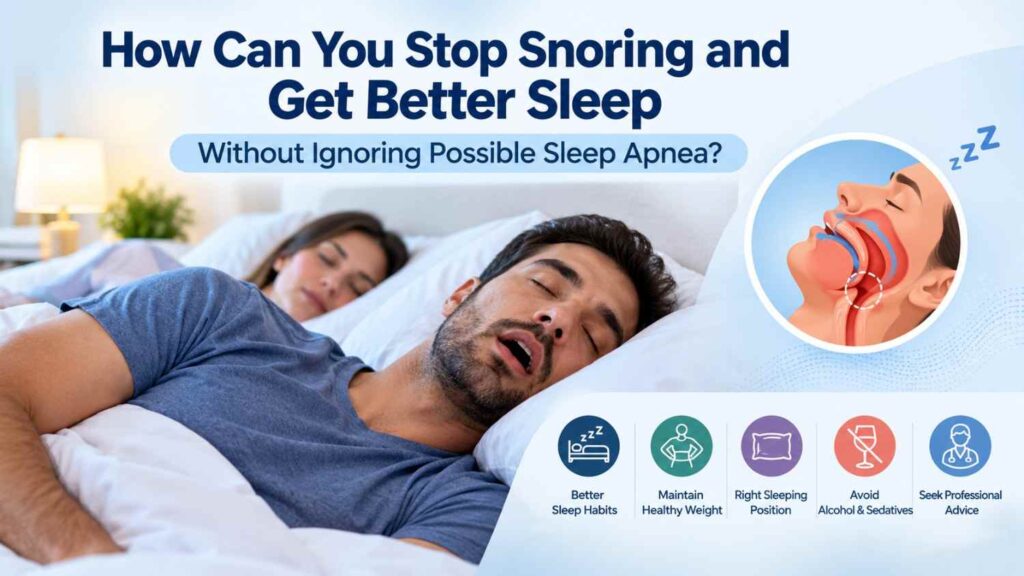
Snoring can seem like a harmless nighttime habit, but when it happens regularly, it may affect sleep quality for both you and your partner. Some people snore because of nasal congestion, sleeping position, or airway narrowing. In other cases, loud snoring may be linked to obstructive sleep apnea, a condition in which breathing repeatedly stops and starts during sleep. Understanding the difference is important for choosing the right approach.
Finding suitable Snoring and Sleep Apnea Solutions begins with recognising your symptoms and understanding what may be causing them. Simple lifestyle changes can help reduce ordinary snoring, but persistent symptoms or breathing interruptions should not be ignored. At Pathania ENT Clinic, patients can seek professional guidance to understand their concerns and explore appropriate treatment options.
What Causes Snoring, and When Could It Indicate Sleep Apnea?
Snoring occurs when air moves through a narrowed airway, causing surrounding tissues to vibrate. Common causes of snoring include nasal blockage, allergies, excess weight, alcohol consumption before bedtime, and sleeping on your back. Age-related changes in muscle tone can also contribute.
However, loud snoring accompanied by choking, gasping, or pauses in breathing may indicate sleep apnea. Other signs and symptoms of sleep apnea include morning headaches, difficulty concentrating, restless sleep, and excessive daytime sleepiness. Not everyone with sleep apnea experiences every symptom.
If your family notices repeated breathing pauses while you sleep, arrange a medical assessment. Identifying the underlying problem is an important first step towards effective Snoring and Sleep Apnea Solutions.
How to Stop Snoring Naturally and Improve Sleep Quality
There are some lifestyle and sleep habits that can diminish snoring, especially if it is sleep position- or lifestyle-related. But none of the home remedies for snoring are reliable for treating obstructive sleep apnea.
Consider these practical changes:
- Sleep on your side: Back sleeping can encourage the tongue and soft tissues to narrow the airway in some people.
- Maintain a healthy weight: If excess weight contributes to airway narrowing, gradual weight management may help reduce symptoms.
- Avoid alcohol near bedtime: Alcohol can relax throat muscles and worsen snoring or sleep apnea.
- Manage nasal congestion: Saline nasal sprays or rinses may help with nasal blockage when used appropriately.
- Follow a regular sleep schedule: Consistent sleep and wake times support better sleep quality and daytime alertness.
These habits may complement professional care, but persistent snoring needs proper evaluation rather than repeated experimentation with home remedies alone.
Understanding Snoring and Sleep Apnea Solutions Through Medical Evaluation
When snoring continues despite lifestyle changes, or when breathing interruptions occur during sleep, a doctor can assess possible causes. An ENT examination may help identify nasal obstruction, enlarged tissues, or other structural issues affecting airflow.
Depending on your symptoms and medical history, the doctor may recommend a sleep study. This test helps determine whether sleep apnea is present and, if so, assesses its severity. Sleep apnea diagnosis and treatment should be guided by the findings rather than snoring volume alone.
Depending on the diagnosis, the right Snoring and Sleep Apnea Solutions can be determined. CPAP, a special mouthpiece for certain patients, weight loss (if indicated), and some surgical procedures are options for sleep apnea treatment. CPAP is used to keep the airway open at night, and surgical options may be available when there are certain anatomical issues that are obstructive.
Those who are thinking of seeking Snoring and sleep apnea treatment Gurgaon can discuss it with an ENT doctor and discover which treatment option may be appropriate for their case.
When to Seek Medical Help for Snoring
Occasional snoring without other symptoms may not indicate a serious problem. However, seek medical advice if your snoring is persistent, unusually loud, or accompanied by gasping, witnessed breathing pauses, morning headaches, or excessive daytime sleepiness. Untreated sleep apnea can increase the risk of high blood pressure and other health complications.
Avoid relying solely on anti-snoring devices or over-the-counter products without understanding the cause. A treatment that helps one person may not work for another, particularly when an underlying breathing disorder is present.
If nasal obstruction, chronic sinus problems, or related ENT concerns are affecting your sleep, consulting a Best sinus surgery specialist in Gurgaon may help you understand whether a sinus condition is contributing to your symptoms. Sinus surgery is not a standard treatment for every case of snoring or sleep apnea; it is considered when a suitable nasal or sinus problem has been identified.
Better Sleep Starts With the Right Snoring and Sleep Apnea Solutions
Better sleep begins with understanding why you snore. Lifestyle changes can help some people, but breathing pauses, choking during sleep, and persistent daytime fatigue deserve medical attention. Early assessment can help identify the cause and guide an appropriate treatment plan.
At Pathania ENT Clinic, professional evaluation can help patients explore suitable Snoring and Sleep Apnea Solutions based on their symptoms and clinical findings. Rather than ignoring repeated sleep disturbances, take the next step towards safer breathing and more restful nights.